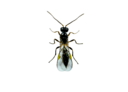
General The onion thrips (Thrips tabaci) is distributed throughout the world. It is found outdoors on many plants and particularly damaging on onions, leek, and in greenhouses on cucurbits, tomato, sw
General The diamond back moth (Plutella xylostella) belongs to the family of Plutellidae . It only attacks Brassicaceae species, including cruciferous weeds. The diamond back moth (Plutella xylostella
General Impatiens thrips (Echinothrips americanus) is an increasing problem in greenhouse cultivation, having spread to many countries within the last 30 years. The thrips have mostly been able to spr
General The American serpentine leaf miner ( Liriomyza trifolii ) originates from North America, but occurs also in Europe since about 1976. The American serpentine leaf miner ( Liriomyza trifolii ) i
General The obscure mealy bug ( Pseudococcus viburni ) (formerly known as Pseudococcus affinis) originates from South America, but can now be found in many parts of the world with a temperate climate.
About Blueberries are flowering perennials with dark blue/purple coloured berries. The plant belongs to the section of Cyanococcus and the genus Vaccinium (cranberries, bilberries and grouseberries al
Lepidoptera Caterpillars What are caterpillars? Caterpillars are the larvae of butterflies and moths. Butterflies and moths form the order Lepidoptera, a very large group with more than 150,000 specie
General The cotton bollworm ( Helicoverpa armigera ) occurs in the tropics and sub-tropics of all continents except for North America. Larvae of the cotton bollworm ( Helicoverpa armigera ) are highly
Hemiptera Leafhoppers
Koppert’s nematode product, Capsanem , is considered the ‘reference’ solution against Nesidiocoris tenuis in France; especially this year when the pressure is really high, with Nesidiocoris showing up