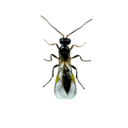
Biological control of flies Flies are a common pest problem in greenhouse and field crops, where they disturb plant growth, spread diseases and affect crop hygiene. Their larvae can damage roots and g
General The tomato leaf miner (Tuta absoluta), a major pest of field- and greenhouse-grown tomatoes, belongs to the family of Gelechiidae . It is oligophagous, feeding mainly on Solanaceae species . T
General The diamond back moth (Plutella xylostella) belongs to the family of Plutellidae . It only attacks Brassicaceae species, including cruciferous weeds. The diamond back moth (Plutella xylostella
General The beet armyworm (Spodoptera exigua) has become a regular problem for horticulturalists due to its resistance to nearly all insecticides, and its ability to develop on wild vegetation during
General The cotton leafworm (Spodoptera littoralis) is a highly polyphagous species feeding on plants of 40 families, containing 87 species of economic importance. It originates in Egypt, and is curre
General The cotton aphid ( Aphis gossypii ) is an extremely polyphagous aphid found on more than 700 plant species. Crop plants attacked by this aphid include cotton, citrus, coffee, cocoa, eggplant,
General The tobacco aphid ( Myzus persicae subsp. nicotianae ) probably evolved from the peach potato aphid in the Far East and is a key pest of tobacco crops in both the United States and South Ameri
Overview It is a pest of huge economic importance, which initially affected potatoes and in recent years has become a problem for other Solanaceae crops such as tomatoes, peppers, aubergines, and toba
General The broad mite (Polyphagotarsonemus latus) occurs in the tropics and in greenhouses in temperate regions. The broad mite (Polyphagotarsonemus latus) has a wide range of host plants, especially
General Impatiens thrips (Echinothrips americanus) is an increasing problem in greenhouse cultivation, having spread to many countries within the last 30 years. The thrips have mostly been able to spr