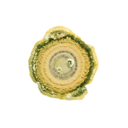
General Fusarium is a group of soil-borne fungi with many different species. Fusarium is widespread and can infect a range of host crops. Many species are considered weak pathogens and can only infect
General The only known stage in all Alternaria species is the asexual stage. Conidia and mycelium overwinter in the soil and on crop residues and cause primary infection of the leaves. Survival can be
General Pythium is considered a ‘weak pathogen’, meaning that it can usually only affect plants that are in a sub-optimal condition or suffer from stress, caused for example by too much water, too hig
General False codling moth ( Thaumatotibia leucotreta ) is native to sub-Saharan Africa and is found in all citrus production areas in Southern Africa. It also occurs on some of the Indian and Atlanti
General Persea mite ( Oligonychus perseae ) a key pest in avocado production worldwide. It lives and feeds on the undersides of avocado leaves, where it forms small webbed feeding colonies that cause
Biological control of beetles Beetles can cause serious damage in many greenhouse and field crops by feeding on leaves, roots, or fruits, leading to reduced growth and yield loss. Effective beetle con
What are bugs? Heteropteran bugs form a group in the order Hemiptera , a highly diverse group of insects, containing both harmful and beneficial species. Heteropteran bugs are insects which have flatt
Biological control of leafhoppers Leafhoppers are highly mobile, sap-sucking pests that feed on plant leaves, causing discoloration, stippling and leaf curling. Their feeding reduces photosynthesis, w