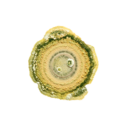
General Erwinia carotovora subsp. carotovora has recently been renamed Pectobacterium carotovora . It is one of the pectolytic bacteria causing extensive bacterial rots (bacterial soft rot, bacterial
General Grey mould ( Botryotinia fuckeliana / Botrytis cinerea ) is a commonly found fungus in many environments. It survives in plant parts like bulbs and crop residues or as sclerotia (drought- and
General Ascochyta pisi is a fungal plant pathogen that causes A scochyta blight on pea (leaf blight or pea blight) and lesions of stems, leaves, and pods (pea leaf spot and pea pod spot). Damage sympt
General False codling moth ( Thaumatotibia leucotreta ) is native to sub-Saharan Africa and is found in all citrus production areas in Southern Africa. It also occurs on some of the Indian and Atlanti
General Persea mite ( Oligonychus perseae ) a key pest in avocado production worldwide. It lives and feeds on the undersides of avocado leaves, where it forms small webbed feeding colonies that cause
Side Effects app Understand the impact of pesticides on beneficial organisms and pollinators Pesticides can have both direct and indirect effects on natural enemies and pollinators. Our Side Effects a
Biological control of beetles Beetles can cause serious damage in many greenhouse and field crops by feeding on leaves, roots, or fruits, leading to reduced growth and yield loss. Effective beetle con
What are bugs? Heteropteran bugs form a group in the order Hemiptera , a highly diverse group of insects, containing both harmful and beneficial species. Heteropteran bugs are insects which have flatt
Macrolophus pygmaeus for pest control Macrolophus pygmaeus is a key predatory bug for biological pest control of whitefly , Tuta absoluta and spide mites. This beneficial insect has been widely employ