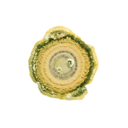
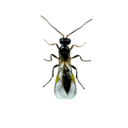
General The greenhouse whitefly ( Trialeurodes vaporariorum ) is one of the major pests of vegetable and ornamental crops in greenhouses throughout the world. The greenhouse whitefly ( Trialeurodes va
When to use Panoramix-GR? Panoramix-GR is a natural product for soil application. It contains Phosphobacteria, soil probiotics and prebiotics which act as bio primer that stimulates the crop growth an
Veni Biosulfur increases the amount of sulphur taken up by the plant. Crops All crops. Mode of action Veni Biosulfur increases the amount of sulphur taken up by the plant. Sulphur is an essential buil
Pests Whitefly with a side effect on aphids and thrips . Crops Vegetables, ornamentals , nursery trees and soft fruit in protected cultivation. Mode of action After spraying Mycotal, the spores germin
Original stories Dive into the rich history and innovative spirit behind Koppert’s predatory mite solutions. Since 1967, we have been at the top of our game helping growers succeed with our unmatched
Koppert One - Digital platform for biological crop protection Koppert One is your all-in-one digital platform designed to simplify and strengthen biological crop protection . By combining expert knowl
Macrolophus pygmaeus for pest control Macrolophus pygmaeus is a key predatory bug for biological pest control of whitefly , Tuta absoluta and spide mites. This beneficial insect has been widely employ
Whitefly control with the parasitic wasp Eretmocerus eremicus Eretmocerus eremicus is a small parasitic wasp belonging to the family Aphelinidae . This beneficial insect is used as an important biolog
Leaf miner control with the parasitic wasp Diglyphus isaea Diglyphus isaea is a small parasitic wasp belonging to the family Eulophidae within the order Hymenoptera . It is widely recognized for its r
Mealybug control with parasitic wasp Anagyrus vladimiri Anagyrus vladimiri is a parasitic wasp belonging to the Encyrtidae family. This parasitic wasp is particularly effective for mealybug control, a