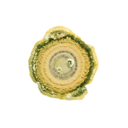
What are nematodes? Nematodes, commonly referred to as roundworms, are a diverse group of worms belonging to the phylum Nematoda. Nematodes are characterized by their unsegmented, cylindrical bodies,
General The diamond back moth (Plutella xylostella) belongs to the family of Plutellidae . It only attacks Brassicaceae species, including cruciferous weeds. The diamond back moth (Plutella xylostella
General The onion thrips (Thrips tabaci) is distributed throughout the world. It is found outdoors on many plants and particularly damaging on onions, leek, and in greenhouses on cucurbits, tomato, sw
General Impatiens thrips (Echinothrips americanus) is an increasing problem in greenhouse cultivation, having spread to many countries within the last 30 years. The thrips have mostly been able to spr
News
Pheromone traps support early detection and population monitoring. With Koppert’s biological solutions for mealybugs and scales, professional growers can
General The obscure mealy bug ( Pseudococcus viburni ) (formerly known as Pseudococcus affinis) originates from South America, but can now be found in many parts of the world with a temperate climate.
General The broad mite (Polyphagotarsonemus latus) occurs in the tropics and in greenhouses in temperate regions. The broad mite (Polyphagotarsonemus latus) has a wide range of host plants, especially
General The cyclamen mite ( Phytonemus pallidus ) is a harmful strawberry pest as well as a common pest found in cyclamen, gerbera and other ornamentals . Mites belonging to the family of tarsonemids