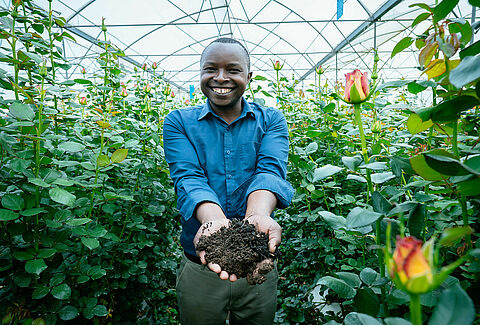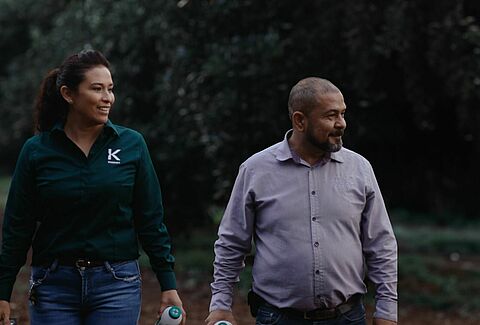
Across Kenya, agriculture remains the backbone of many livelihoods, with millions of smallholder farmers working to feed communities, secure the future of food systems, and ultimately sustain the economy, yet, these farmers face increasing pressure from climate variability and declining soil health to rising input costs and pest resistance linked to conventional chemical use.
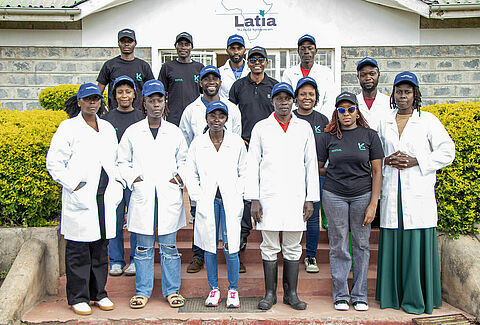
In response to these challenges, Koppert Kenya, in partnership with Latia Agribusiness Institute (LAI), with the supportof Koppert Foundation has launched a transformative one-year initiative designed to bridge the gap between knowledge and practice, while accelerating the adoption of sustainable agricultural practices.
Why This Project Matters
Given that Kenyan agriculture is largely driven by smallholder farmers, who account for over 70% of the sector and predominantly practice open-field farming, this initiative is grounded in a simple yet key observation: when farmers see solutions working in real conditions, they are far more likely to trust and adopt them.
While awareness around biological crop protection and soil health is growing, adoption at the smallholder level has often been limited by:
- Lack of hands-on exposure
- Limited access to practical training
- Uncertainty around performance compared to conventional methods
This project directly addresses these barriers by shifting from theory-based learning to experiential, field-driven engagement.
A Partnership for Practical Impact
Through this collaboration, the project integrates biological solutions, innovation, and sustainability into agricultural training and farmer engagement.
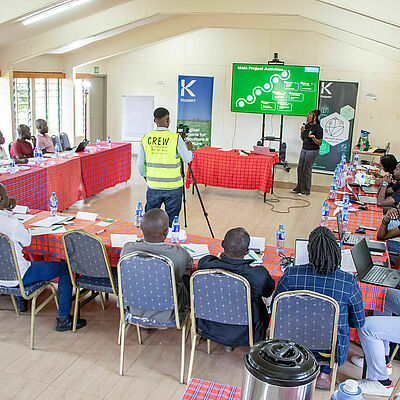
By embedding Koppert’s expertise into LAI’s training modules, both students and farmers will gain access to:
- Practical knowledge on biological crop protection
- Real-time demonstrations of sustainable farming practices
- Exposure to regenerative and conservation agriculture techniques
This ensures that learning is not only theoretical but rooted in real-world and commercial applications.
Learning by Doing: The Knowledge Centre Approach
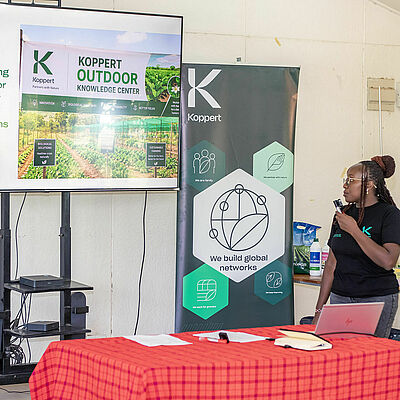
Central to the project is the establishment of a dynamic Outdoor Knowledge Centre, where farmers, students, and stakeholders are invited to engage directly in demonstration plots and ongoing agricultural activities throughout the year, including farmer field days.
Rather than one-off training sessions, the project adopts an “open-door” model, allowing continuous learning across different crop stages from planting to harvest. This approach will ensure that there is always something tangible for farmers to observe, question, and learn from.
We believe that the knowledge center will give a platform where biological solutions are applied, monitored, and evaluated in real time.
Empowering Farmers as Champions of Change
To extend impact beyond the Knowledge Centre, the project introduces a sustainable peer-to-peer model through Smallholder Farmer Champions (SHFCs).
These are progressive farmers selected for their influence, commitment, and willingness to adopt innovation.
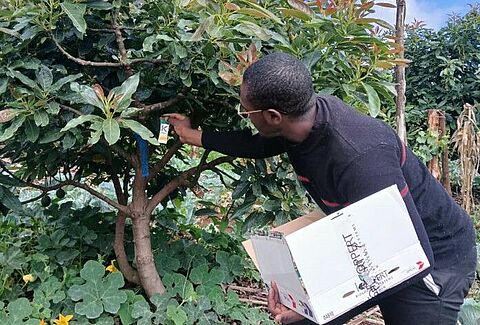
After receiving intensive training, each champion will establish a demonstration plot on their own farm, transforming it into a local learning hub.
Through these hubs:
- Surrounding farmers gain access to practical demonstrations
- Communities engage in shared learning experiences
- Biological solutions become more accessible and relatable
This model builds trust and ensures that knowledge spreads organically within farming communities.
The Power of Demonstrating Sustainable Solutions That Work
Across both the Knowledge Centre and farmer-led plots, biological solutions will be applied alongside conventional practices, enabling clear, side-by-side comparisons. Farmers can directly observe:
- Improvements in crop health and vigor
- Effective pest and disease management
- Enhanced soil vitality
- Improvement to yield quality and quantity
- Long-term sustainability benefits
By making results visible, the project reinforces confidence in biological agriculture, not as an alternative, but as a reliable and forward-thinking solution.
Beyond training and demonstrations, this initiative is designed to create lasting impact by:
- Strengthening farmer capacity and decision-making
- Expanding access to biological inputs through local networks
- Expanding access to premium markets for sustainably grown produce
- Supporting the shift toward more sustainable, climate-smart practices
Ultimately, the project positions farmers not just as beneficiaries, but as active participants in shaping the future of agriculture.
A Shared Vision- Building Toward a More Resilient Future
As this journey unfolds over the coming year, Koppert Kenya and Latia Agribusiness Institute remain committed to one goal: To empower farmers with the knowledge, tools, and confidence to grow healthier crops, restore their soils, and build more resilient farming systems.